Why Short Film Is So Powerful: As a Form of Communication and a Tool for Social Awareness
Throughout history, cinema has not only been a tool for entertainment but also a space for thinking, questioning, and confrontation. Short films, in particular, despite their limited runtime, have become one of the most effective platforms for making social issues dramatically visible through their concentrated narrative power. Today, topics such as growing inequalities, migration, identity issues, environmental crisis, gender debates, and economic injustices find powerful expression in the work of young and independent filmmakers.
For the socially conscious short filmmaker, social problems, systemic failings, and emerging emotions are important messages that must be voiced. Short films carry enormous functional importance in conveying this message and raising awareness among people.
Short films are also more mobile thanks to the budget advantage provided by their short duration. It can be produced and released quickly. An awareness movement can be created with numerous creative short films on the same topic.
At precisely this point, short film emerges not only as an art form, but as a language of communication, a space of expression, and a note left in collective memory. Voicing social issues through short film requires a strategic approach both in production and distribution. This is exactly why global distribution platforms designed specifically for short film—like ShortFilmBox—have become one of the most critical parts of this process.
Short film brings social problems to the agenda and tells their story—in this respect, it is a powerful communication tool. It acts as a mirror, and its role in creating awareness is valuable. The question of how short films can be independently produced and how these productions can gain visibility on a global scale finds its answer in ShortFilmBox's strategic distribution model.
Short Film: Time's Constraint, Meaning's Intensity
Short film is often seen as a "stepping stone to feature film." Yet this approach means underestimating short film's unique aesthetic and narrative power. Short film is an independent form in its own right.
The limited runtime of short film simplifies the narrative. It prevents unnecessary dramatic extensions, concentrates characters and conflict. This concentration is extremely functional when addressing social issues. Because a powerful metaphor about an issue, a striking scene, or a dramatic structure built around a single character leaves a lasting mark on the viewer's mind.
For example, a 12-minute film telling the story of a single day in a refugee child's life can create a more powerful field of empathy than a documentary lasting hours. A minimalist narrative showing the microaggressions a female character experiences in the workplace can be more effective than a long debate program. Or a short film about a mother who has lost her expected baby shows us how to create an unforgettable impact without using any words. The metaphors used directly convey emotion to the viewer, and words become unnecessary.
Short film here produces a "concentrated reality." And this concentration amplifies the emotional and intellectual impact of social issues. An idea, emotion, or social problem has taken on flesh and blood—it now exists for the viewer, it is in front of them. The issue addressed in short film has now gained reality. The problem is now before the viewer's eyes. It makes them feel the obligation to take initiative. As a result, for the viewer, that problem must be solved, and the viewer is part of this process.
Short Film Is a Form of Communication
Expressing social issues through cinema is actually a communication strategy. At this point, short film stands in a different position from classical media tools:
- News texts provide information.
- Academic articles analyze.
- Social media content is consumed quickly. The goal is not to create social sensitivity but to attract attention.
Short film helps gain experience. The viewer sees the world through a character's eyes. Feels the atmosphere of a space. Remains within a silence. This is a far more powerful communication model than mere information transfer.
For example, consider the climate crisis. A report full of statistics can remain abstract or uninteresting for most people. But a short film telling the story of a farmer forced to leave their village due to drought carries the crisis to a human dimension. Numbers suddenly become faces. They take on reality and make empathy easier. What that farmer experiences and the potential consequence of the climate crisis are now before us and have materialized. It contributes to making sense of the situation through empathy.
For this reason, short film produces "emotional data." And social transformation often begins with the impact of this emotional data. Short film includes the topic it addresses in the viewer's agenda and creates an atmosphere around the topic. Social memory is constructed.
The Power to Create Awareness Through Empathy Mechanism
Social awareness is not merely being informed about a topic. It is developing sensitivity toward that topic, questioning thought patterns, and being able to show behavioral change when necessary.
Short film activates the empathy-building mechanism. Empathy neuropsychologically occurs when a person internalizes the emotion of the person opposite them. Cinema triggers this process by bringing together visual and auditory elements.
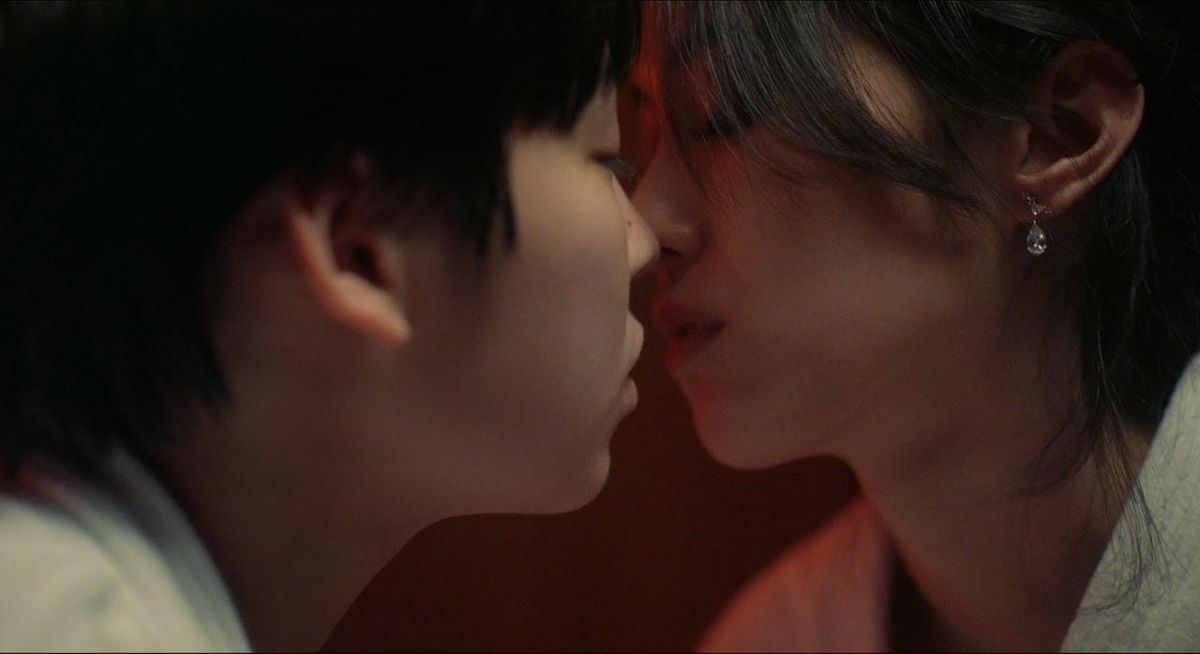
A close-up face, a long silence, a breath heard in the background, a dark corridor, or a single glance... Each of these enables the viewer to connect at a subconscious level.
When topics like gender inequality, immigration, poverty, peer bullying, and digital addiction are told in short film format, they cease being abstract discussions and become individual experiences. This transformation is the starting point of awareness.
Short Film and Activism: The Political Power of Art
Short film does not always have to be directly political. However, every narrative addressing social issues inevitably touches a political framework. Because social issues are connected to power relations and systemic structures. If a short film about a mother and child shows the mother facing eviction from her home and cancellation of her work permit, yet still struggling to raise her child well, this film is political. The difficulties of single parenthood and the impact of short film in finding solutions to these difficulties is quite significant.
From another angle, independent short film production often opens space for stories that mainstream cinema overlooks. Underrepresented groups, alternative perspectives, marginalized identities, and dissenting views that are not brought to the agenda often gain visibility through short film.
Throughout world cinema history, many festivals have triggered social debates by opening space for such productions. For example, the Berlin International Film Festival is known for supporting politically and socially themed productions with awards like the Golden Bear. At such festivals, short films are evaluated not only as artistic achievements but as works carrying social messages.
However, festival circulation alone is not sufficient. For a film to create awareness, it must reach audiences. This is where distribution strategy comes into play.
The Critical Role of Distribution in Socially Conscious Short Films
Producing a short film is a challenging process in itself. But the real problem often begins after the film is completed. Visibility, recognition, overcoming language barriers to meet global audiences, and reaching the right audience are the biggest problems.
Feature films enter circulation through a wide network of classic distributors, cinema halls, and streaming giants. Short films often remain limited to festival screenings. Yet for a short film addressing social issues, a sustainable and global distribution model is vitally important.
When a film about social issues is watched by only 200 people in a festival hall, its impact remains limited. But when distributed across multiple channels like digital, television, airlines, and educational platforms, it can truly create awareness.
Short film's inherently flexible and digitally compatible nature is a major advantage for global distribution. But to leverage this advantage requires a system designed specifically for short film. The distribution system designed for feature films is not very functional for short film. There is definitely a need for a global distribution system focused only on short film, and ShortFilmBox meets this need.
ShortFilmBox: A Global Model Specialized in Short Film Distribution
ShortFilmBox is a global distribution platform focused solely on short films. This emphasis is extremely important. Because short film distribution and feature film distribution are not conducted with the same strategy.
Short film:
- Is consumed in a shorter time
- Is suitable for educational institutions
- Can be included in airline in-flight entertainment systems
- Can reach niche audiences on digital platforms
- Can be programmed on TV and special screening networks
ShortFilmBox offers a structure designed around these different dynamics. The platform's three-tier subscription model produces a scalable solution for both beginning and professional short filmmakers.
ShortFilmBox provides distribution and monetization opportunities at 20+ points for the prepared film. This multi-channel distribution model does not confine the film to a single medium. It brings the film together with different audience groups in different channels. This is a highly strategic move. Because a randomly selected single broadcast platform makes the film difficult to discover and shortens the film's natural broadcast lifespan.
Additionally, ShortFilmBox's preparation of 6+ language subtitles enables the short film to circulate in different geographies. Language is no longer a barrier. Your short film is ready to meet audiences everywhere in the world. With director-specific profiles and "Buy Me a Coffee" integration, the director receives direct audience feedback on the film. The director can draw a more accurate roadmap for the film with solid data, not superficial guesses. It also creates an accurate reference point for future films.
This situation opens the first visibility door especially for independent films with social content. It provides controlled and strategic screening opportunities for short films addressing social issues. The existing structure supports short film not only in the production phase but also in the context of strategic planning and career building. For a short film addressing social issues, this kind of distribution ecosystem enables the message to truly enter global circulation.
Is Short Film a CV, or a Social Intervention Tool?
There is a frequently asked question in the industry: Is short film a "business card"? The answer to this question is yes—short film shows a director's aesthetic and narrative language. It reflects their style and the window through which they view life. But in socially conscious productions, short film is far more than this.
A short film is a contribution to social memory, an archive. It is a form of objection to the system and process. It is a proposed solution to a problem or a call for solidarity.
For example, a short film addressing migration is not only a career step for a director but also becomes visual testimony for those who want to understand that period in the future. For this reason, short film produces meaning both at individual and collective levels. It constructs memory.
Short Film and Global Awareness in the Digital Age
Digitalization is one of short film's greatest advantages. Because its duration is short, it suits mobile consumption habits. It can be integrated into the social media ecosystem. It can be used together with educational content.
However, in a world governed by algorithms, strategic distribution of content is critically important. Mere production is not enough; it must meet the right audience on the right channels.
ShortFilmBox's distribution network focused on short film builds a bridge between producer and audience at this point. A film addressing social issues can start new discussions in different countries, in different cultures.
A film telling about women's rights in one country can ensure that a viewer with a similar experience in another country does not feel alone. Global circulation carries local stories into universal context.
Conclusion: Short Film, the Silent but Powerful Tool of Social Transformation
Short film is a narrative form with short duration but long-lasting impact. It makes social issues visible, produces empathy, starts discussions, and leaves marks on memory. In this respect, it is not merely an art practice. Short film is a communication strategy, an awareness mechanism, and sometimes a form of resistance.
However, powerful content remains limited without proper distribution. For short films addressing social issues to reach their true potential, they need a global distribution model specific to short film.
ShortFilmBox positions itself precisely at this point: a platform designed specifically for short film producers, operating on a global scale, and offering a sustainable ecosystem in the context of short film production.
If short film is not just an experiment for you but a way of speaking, if you want to make social issues visible, if you aim for your story to reach audiences worldwide, you should work with ShortFilmBox. ShortFilmBox wants you to focus only on your film in the film production process. It takes on background tasks like distribution, licensing, subtitles, and multi-channel distribution.
Then it is time to combine your production with the right strategy. Short film is communication, and proper distribution ensures this communication is heard. You determine your topic, let your creativity speak, shoot your film independently and originally. Reach global audiences with ShortFilmBox.