Short Film Distribution vs. Strategic Distribution: What's the Difference and What Does It Actually Cover?
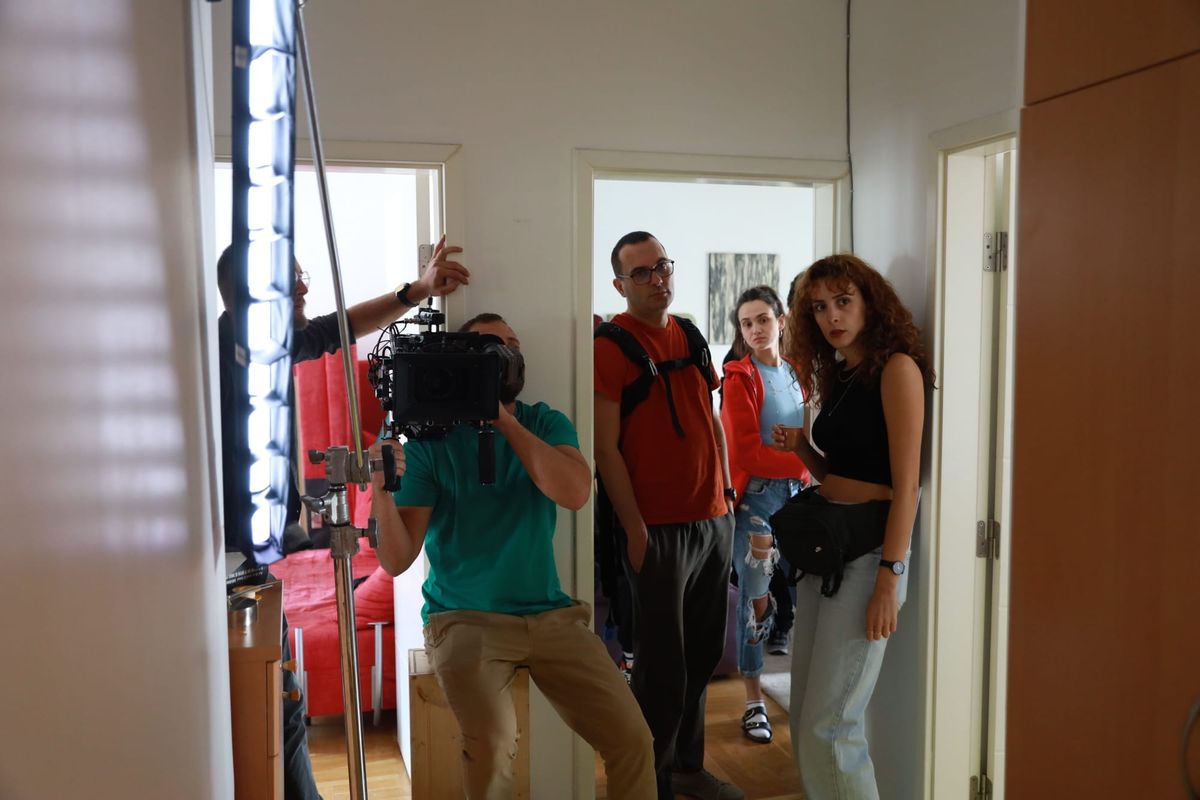
There's a moment every short filmmaker recognizes. After months of shooting, editing, sound work, color grading, and a steady stream of small crises, the crew finally exhales for the first time. The director wants to do nothing but sleep for a few days. Because independent short film production is rarely the romantic creative process people imagine. Most of the time, it's controlled chaos management.
From the outside, short film looks like a few days of shooting. Get inside the process, though, and everyone runs into the same truth. Making a short film means constantly propping up a system that's missing something at every turn.
Budgets that never quite materialize. Locations that cancel at the last minute. Crews who agree to work for free, or don't. Shoots that get pushed back. Audio that comes back damaged. Materials that don't make a festival deadline in time. At some point, directors stop being storytellers and start being crisis managers.
But anyone who has spent real time in this industry knows something else too. The hardest part of a short film often begins after the film is finished. Because in the short film ecosystem, visibility is just as much of a problem as production, if not bigger. Making a film doesn't mean it gets watched. Thousands of short films are produced every year, and the overwhelming majority disappear from view after a handful of festival screenings.
This is exactly why distribution has become a far more critical conversation in short film over the past several years. The old goal for short filmmakers was getting into a festival selection. Today the question has shifted. Will the film just get selected, or will it actually circulate? There's a real gap between those two outcomes, and understanding short film distribution starts right there.
Why Making a Short Film Is Harder Than People Assume
For years, short film production was treated as a transitional format. A space where a director tests themselves, a rehearsal before moving on to features. But short film has become its own territory entirely, with its own language, its own economics, and its own audience culture. Despite that shift, the core problem in short film production hasn't changed. It's still being made outside the system.
Most independent short filmmakers are juggling several jobs at once. People working a day job and editing at night, directors pulling crews together from their friend group, cinematographers borrowing equipment, this has become the norm in short film. So when everyone on a short film set looks a little more exhausted than they should, it's not just physical fatigue. People are also working under invisible uncertainty.
The real problem with what happens after a film wraps usually starts right here. A significant portion of short filmmakers pour nearly all of their energy into production and never plan what happens to the film afterward. But in the professional film world, production and distribution can't actually be separated.
Where a film circulates, which audiences it reaches, in what order it gets shown, which platforms it ends up on, all of this matters just as much as the production process. In the short film world, distribution too often stays an afterthought. That's exactly why so many genuinely good short films quietly vanish.
The Exhausting Journey That Begins After the Film Is Finished
Once a short film is complete, most directors immediately focus on the festival circuit. That's a natural instinct. Festivals remain one of the most important visibility spaces for short films. But the festival process doesn't move nearly as smoothly as it looks from the outside.
For first time directors especially, this period can be genuinely draining. Most short film festivals run on intense elimination systems. A small selection gets pulled from hundreds, sometimes thousands, of submissions. Being a good film simply isn't enough on its own. Programming balance, festival politics, premiere status, runtime, geographic diversity, thematic fit, dozens of invisible criteria come into play.
That's why genuinely strong films sometimes go months without landing a single selection. And this is exactly where one of the most common breaking points for short filmmakers shows up. "Is my film a failure?" becomes a question that puts both the film and the filmmaker through a brutal kind of self evaluation.
Most of the time, the issue isn't that the film is bad. It's that the circulation strategy was missing. Because visibility in the short film world doesn't move in a straight line. A film rejected at one festival can find serious attention in another country. A film overlooked at a festival can reach hundreds of thousands of viewers on a digital platform.
The rise of digital short film platforms in recent years has genuinely changed the life cycle of short films. In the past, most films were forgotten on hard drives once the festival tour ended. Now films can live a second life, even a third. That shift is exactly what has made short film distribution so much more important.
What Do Distribution and Strategic Distribution Actually Mean?
In its simplest definition, short film distribution is planning the process by which a film reaches its audience. In practice, though, that definition falls short. Because short film distribution isn't just uploading a film somewhere.
Strategic distribution is really the combination of visibility, timing, relationship management, broadcast strategy, and circulation design. Starting from the festival stage, and the festival process is part of this too, it means building a strategic roadmap.
A short film's journey is obviously not limited to festivals. Through strategic distribution, a film can:
- Circulate across international festivals
- Stream on curated digital platforms
- Get included in university screenings
- Enter the selections of cultural institutions
- Appear on airline entertainment systems
- Get licensed to television
- Be used in educational catalogs
- Join thematic short film programs
- Find a second life through online list-based screenings
Here's the important detail. In the short film world, distribution doesn't just mean "publishing." Distribution means being able to keep a film alive for a meaningfully long time. This is also what most directors realize too late. Making the film is one thing. Building the space where the film will actually live is a completely different thing.
Visibility in today's short film ecosystem no longer comes from festival selections alone. People discover short films in different ways now. As curation culture has strengthened, audiences have started following short films through platforms specifically.
This is exactly why platforms focused solely on short film, like Cineshort, have become a bigger part of the conversation lately. It's not just that they publish content. It's that they extend how long short films stay visible. The thing worth remembering here is that the biggest danger for a short film isn't bad reviews. Feedback, after all, is always a useful reference point for your next film. The biggest danger for a short film is its lifespan ending too early and being forgotten.
What's the Difference Between Distribution and Strategic Distribution?
One of the most common mistakes in the short film world is treating distribution as a purely technical task. But the real power of professional distribution lies in strategy. Submitting a film to a hundred festivals isn't strategic distribution. Uploading a film to YouTube isn't distribution on its own either. Because the issue isn't just access, it's how that access gets managed. That's exactly where strategic distribution comes in.
Strategic distribution means thinking together about a film's genre, its target audience, its festival potential, its geographic relevance, its digital life expectancy, and the director's career goals. Some short films, for example, are festival oriented. Their premiere value is high. They need to stay offline for an extended period.
Other films can connect with digital audiences much faster. Experimental work, films aimed at younger audiences, or short films with high emotional impact often find bigger visibility on digital platforms than they ever would through the festival circuit.
Strategic distribution asks the question, "what should happen first, how should the film's roadmap be drawn?" Because in the short film world, bad timing can seriously affect a film's lifespan.
A film released online too early can get disqualified from consideration by some major festivals. On the flip side, a film whose festival journey drags on too long can lose its shot at digital visibility.
So the real issue isn't only making a good film. It's reading the film's rhythm correctly. This is usually exactly where professional distribution networks make the difference.
What Does Short Film Distribution Actually Cover?
From the outside, short film distribution looks like nothing more than festival applications. In reality, the operational side of it is much broader. A short film's professional distribution process generally involves managing several categories at once.
Festival strategy, application calendars, premiere planning, subtitle management, technical delivery files, posters and press materials, country specific broadcast decisions, platform relationships, digital release planning, broadcast rights, connections with educational and cultural institutions, television and airline licensing, audience analytics, and long term visibility planning.
But the least visible part of the work is relationship management. Because the short film world is a much smaller ecosystem than people assume. Programmers, curators, platform editors, and distribution networks are constantly communicating with each other. So distribution sometimes turns less into a matter of technical knowledge and more into the skill of putting a film in front of the right people.
This effect is especially strong in the international short film ecosystem. Some short films gain real circulation simply because they landed on the right programmer's radar. Others, despite being genuinely strong, disappear because they never reached the right visibility networks. For an individual short film producer, getting to know these people and building the necessary network connections is extremely difficult on their own. That's exactly why people in the professional short film world increasingly talk not just about "making films," but about "circulating films."
Should a Director Publish Their Own Short Film?
This question comes up more often now. With the explosion of digital platforms, publishing a short film has become technically simple. Today anyone can put their film online in a matter of minutes, and that's exactly why being seen has become harder. There's no shortage of content online. There's a shortage of visibility.
A short film simply being online by itself is no longer enough. Algorithms largely reward structures that produce content continuously. A single short film usually becomes invisible within a few days. That's why many directors who publish their own films don't see the response they were hoping for.
The problem here usually isn't the film. It's the absence of context around the film and the lack of weight needed to feed an algorithm. Audiences mostly discover short films not as standalone content, but through curation. Inside a selection, within a thematic flow, among editorial recommendations, or on platforms specifically built around short film publishing and short film distribution, like Cineshort.
This is exactly why short film focused broadcast networks have become more important in recent years. Platforms dedicated solely to short film, particularly Cineshort, have become one of the spaces actively reshaping audience behavior. Because a short film audience genuinely exists, it's just scattered. People generally aren't searching for short films. They're waiting for a good one to land in front of them.
This makes curation even more critical in the short film world. And that shift has changed how directors think about distribution too. The old question used to be "where do I put my film?" Today the question has turned into "what context can this film actually live in?"
Why Does Joining a Professional Distribution Network Matter?
Many directors in independent cinema are used to doing everything themselves. That sometimes creates a sense of creative control. But going it alone on the distribution side can become genuinely exhausting over time. Because short film distribution isn't just an organizational task, it's also a time intensive one.
Tracking festival deadlines, communicating with the right platforms, managing technical delivery processes, checking territory specific rights status, all of this requires serious operational effort. And many directors eventually turn from someone who creates into someone who's constantly just tracking things down. That drains creative energy.
This is exactly where the value of professional distribution networks becomes clear. A good distribution partner isn't just a structure that sends the film out. It's a structure actively working to extend the film's chances of survival. Which region might respond more strongly? Which platform is the better fit for this specific film? When should the festival run end? What's the right moment for online release? How can the film find a second circulation life? All of this is part of professional distribution thinking.
As the short film ecosystem has become increasingly global in recent years, the importance of these networks has only grown. Short films today aren't just circulating through festivals. They're moving through digital platforms, mobile apps, curated selections, and alternative broadcast spaces.
This is exactly why platforms like Cineshort come up so often in industry conversation. These aren't simply places that publish films. They function as ecosystem pieces that extend a short film's circulation lifespan. Because one of the most valuable things for a short film today is sustainable visibility.
To deliver that visibility, Cineshort distributes your film across a wide range of channels through its short-film-focused Smart-Hub model and strategic distribution system, with extensive subtitle support built in. Subtitle support across nearly twenty languages matters enormously for a short film, and carries real value. That much language coverage means being able to reach people living across very different regions of the world.
Through the Smart-Hub model, the film gets localized and distributed for release across different mediums. That includes curated selections, digital platforms, telecom partners, and the in-flight entertainment systems of airline companies. All of this helps your film stay in circulation, remain visible, generate revenue, and build a solid, lasting career.
And Cineshort's distribution model goes beyond just that. Alongside all of this support, you can track your film's entire broadcast journey transparently from a single screen, for a modest participation cost.
The arrangement is actually simple. You make your film. Cineshort takes on the full localization and multi-channel distribution process for you, costs included. It plans and tracks the film's journey. The film's lifespan extends, and it stays in the conversation.
Can a Short Film's Broadcast Life Actually Be Extended?
This is genuinely one of the most critical questions in the short film world, and the answer is clearly yes. But it doesn't happen on its own. A short film's broadcast life gets extended through strategy.
In the past, short films had a fairly short lifespan. The festival tour would end, a handful of special screenings would happen, and the film would largely fall out of circulation. Today the situation is different. As digital short film culture has grown, films can live entirely new second lives. Some short films even reach the visibility they never found during their festival run years later, through digital circulation. The important thing here is not rushing.
Some directors publish their film online the moment it's finished, because they want it seen. That's an understandable instinct, especially after years of work poured into a single project. But a short film's life cycle can be far longer when it's properly planned.
When you put festival circulation, regional screenings, thematic selections, digital platforms, curated broadcasts, special events, and educational screenings together, a short film can keep living for years.
This may be exactly where the biggest transformation in the short film world is actually happening. The issue is no longer just making the film. The biggest issue is being able to keep the film in circulation. Because in today's short film culture, visibility isn't seen as a single moment. Visibility means a sustained, ongoing movement.
In Conclusion
People in the short film world still mostly talk about the production process. Camera choices, festival selections, set stories, the hunt for funding.
But the real problem quietly growing underneath the industry sits somewhere else. Films get made, but they don't live long enough. Many directors lose the film they spent years on after just a handful of screenings. Because the most fragile point in short film isn't production. It's circulation.
Yet today, short film is no longer a temporary format. It's its own independent territory, with its own audience, its own culture, and its own digital circulation. That's why distribution is no longer a technical detail. It's a direct part of the creative process. A short film isn't just shot, it's positioned, circulated, protected, and matched with the right people at the right time.
This is exactly where the changing side of the short film ecosystem begins. A new short film culture is forming, one that lives beyond the festival, gets rediscovered digitally, circulates across platforms, and gains context through curation.
The natural growth of short-film-focused platforms like Cineshort is actually the result of this exact shift. Because short film directors no longer just want to publish. They want their films to stop disappearing. Maybe that's the truest definition of distribution in short film: not just making a film visible, but protecting it from being forgotten and lost.
Cineshort stands by short films and independent short filmmakers, always. After all, isn't this what we say at the end of every article?
Thank goodness we have short films in our lives.