Sydney Film Festival 2026 and the Industry Truths Behind the Future of Short Film
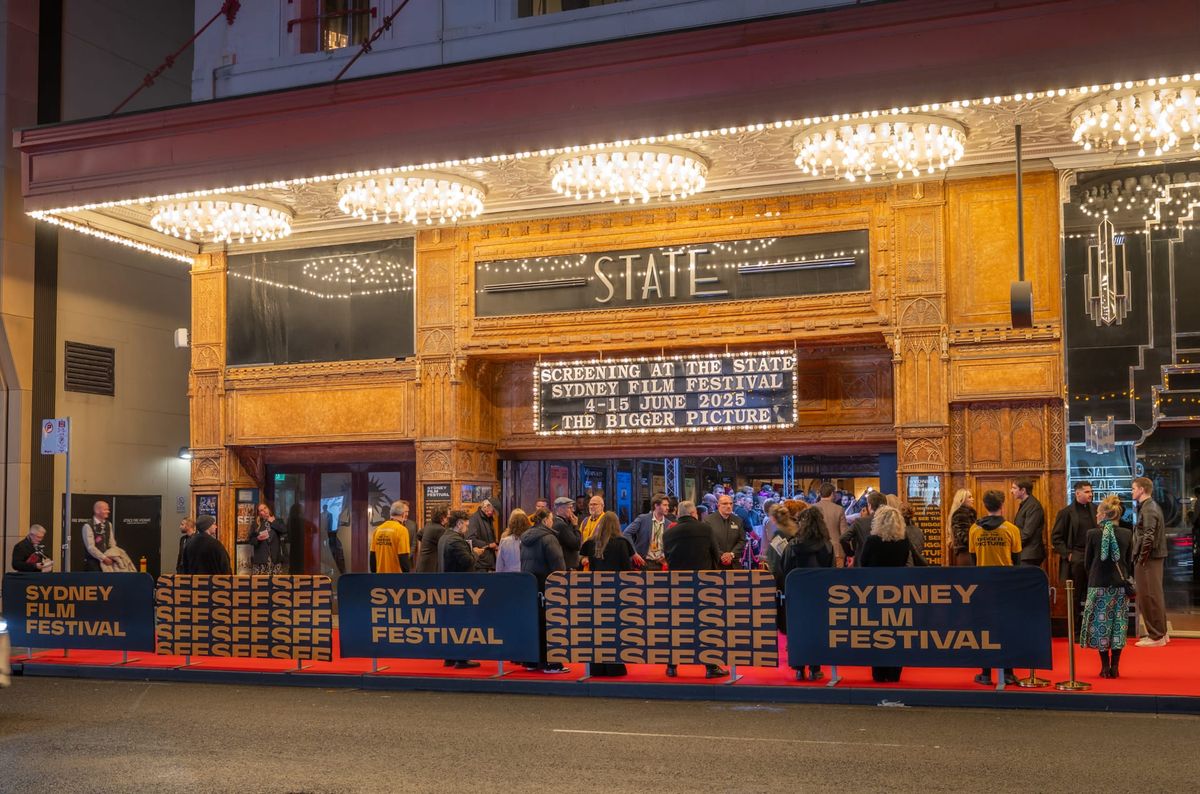
The Sydney Film Festival arrives this year with one of its strongest programs yet. The 73rd edition runs from June 3 to 14, 2026, presenting 248 films from 81 countries. The lineup includes 19 films arriving directly from Cannes, 19 world premieres, and 140 Australian premieres. For audiences, this adds up to one of the most genuinely exciting editions in recent memory.
The festival opens this year with director Selina Miles' documentary "Silenced," making its Australian premiere. The film follows international human rights lawyer Jennifer Robinson's fight against systems designed to silence victims and journalists. Screenings will take place across the State Theatre, the Sydney Opera House, and venues throughout the city.
The Sydney Film Prize competition remains the festival's most prestigious section. The winning film receives 60,000 Australian dollars. The competition is FIAPF accredited, making it Australia's only internationally competitive film festival. A significant share of the productions that drew critical attention after Cannes will make their Australian premiere here.
The Festival Jury
According to festival announcements, the competition jury will be chaired by Brazilian director Kleber Mendonça Filho, a previous Sydney Film Prize winner and one of the most discussed names coming out of this year's Cannes. Festival organizers confirmed the jury is composed of international cinema professionals and filmmakers.
Among this year's most notable guests are Peter Weir, Andrey Zvyagintsev, and Marie Kreutzer. Festival announcements specifically describe Peter Weir as a "legendary Australian filmmaker," and the framing has created a genuine sense of tribute within the industry surrounding his presence.
No official announcement has yet been made regarding hosts for the opening and closing galas. International press, meanwhile, has described this year's Sydney program as "one of the strongest post-Cannes selections," with particular emphasis on the inclusion of the 19 Cannes titles.
From a University Campus to the Map of World Cinema
The story of the Sydney Film Festival began in 1954 with a small group of film enthusiasts. At the time, Australian cinemas were dominated almost entirely by Hollywood releases. European cinema, experimental work, independent productions, and alternative narratives struggled to reach audiences at all.
The festival's founding purpose was straightforward: bring films from around the world to Australian viewers. More than seventy years later, that purpose hasn't changed, even as the festival's scale has grown dramatically.
Today, the Sydney Film Festival is considered one of the most significant cinema events not just in Australia, but across the entire Southern Hemisphere. Films discussed at Cannes reach Sydney audiences within weeks. Directors discovered in Berlin find new viewers here. Rising filmmakers from the Asia-Pacific region gain visibility through this platform.
The festival's real strength has never been about red carpets or untouchable glamour. Sydney's power lies in its curation. This year's short film selection makes that point clearly, with a list of ambitious films competing head to head.
Industry Excitement Around the Festival
Sydney is no longer viewed simply as a screening festival. It has become an important stop in the post-Cannes positioning cycle for sales, distribution, and awards season, particularly for independent films seeking entry into the Asia-Pacific market.
The Dendy Awards
The short film side of the Sydney Film Festival looks stronger than expected this year. The Dendy Awards selection in particular offers a clear picture of where Australian short film aesthetics currently stand. First Nations stories, body politics, female adolescence, queer characters, addiction, psychological tension, and experimental animation all feature prominently. The program has shifted away from a traditional "Australian short film" aesthetic toward something more international, darker, and more genre focused. Films built around young female perspectives, horror, aesthetics, and body perception form the backbone of this year's program.
The Dendy Finalists
This year's ten finalists make for an exciting lineup.
Maŋutji (Catching Eyes) is a First Nations coming of age romance set within the Yirrkala Aboriginal community in Arnhem Land. The film follows two young people navigating their attraction to each other within cultural boundaries and kinship systems. Its portrayal of young love within traditional community structures has made it one of the program's most distinctive entries. Sydney has invested seriously in First Nations cinema in recent years, and Maŋutji is expected to gain real visibility not only within the Dendy selection but across the festival's broader First Nations programming.
Date 3, starring Kate Box and Daniel Henshall, is a psychological relationship drama. What initially reads as an ordinary third date story grows increasingly tense as the boundaries within the relationship begin to blur while Ella prepares to meet Harry. The film builds tension around consent, communication, modern dating culture, and gendered perception, and is being discussed as one of the strongest acting showcases in the program.
Sugar is an addiction drama following Oscar, a sex worker introduced to drugs by an older man, with the situation rapidly spiraling out of control. After an overdose, he faces a decision that will change the course of his life. The film handles addiction, queer life, manipulation, and self destruction with notable depth, positioning it within the kind of dark character study that tends to draw jury attention.
Ginkgo is a family drama centered on an elderly woman living with dementia and the daughter caring for her. The film moves between different layers of time, weaving together childhood memory, motherhood, memory loss, and identity dissolution. Its emotional structure gives it real potential to connect strongly with audience choice categories.
Raft Race is a coming of age comedy following 11 year old Frankie as she develops a new awareness of her body during a traditional family camping trip. The film centers on adolescence, the gaze, female embodiment, and the shame culture imposed on girls from a young age, placing it among the wave of "young female perspective" films that has been rising in Australian short cinema.
Our Choir Has Always Been Travelling is an animated documentary tracing the generations long cultural impact of the Ntaria Choir, previously known as the Hermannsburg Choir, recognized as one of the most significant musical institutions in Australian Indigenous culture. Its combination of documentary, archival footage, and animation makes it a strong contender in the animation category.
Flesh Fruit, a horror film, may well be the most talked about short of the year. A struggling farmer begins selling a new fruit product to stay afloat economically, but the fruit's origin hides a terrible secret tied directly to his domineering mother. Industry conversation already positions it as one of the Dendy selection's strongest international festival prospects.
Flywire is an experimental animation following a mysterious vehicle moving through reeds at night while everyone sleeps, built almost entirely around atmosphere. Its distinctive technique gives it real potential to surprise in the animation category.
Mr Adidos stars Nash Edgerton in an absurdist comedy about a character named Bronson who becomes obsessed with finding a vintage sweater, only for the story to spiral into the surreal once he encounters a pair of strange twins.
Saint Valentine is a coming of age drama with dark comic elements, following two isolated and unsupervised sisters whose lives change when two Mormon missionaries arrive at their door. The film addresses sexuality, religious pressure, adolescence, and loneliness, and is being widely discussed as one of the program's strongest screenplay contenders. Festival programmers have clearly leaned toward voices that are younger, more political, and more culturally local.
Equalizing Inequality
The festival's Screenability section deserves particular attention. It has grown significantly in recent years, focusing on work by disabled filmmakers, Deaf cinema, and stories of chronic illness, helping close gaps in representation that have long existed across the industry.
A Few Industry Truths
There is a truth in the short film world that everyone knows but few people say out loud. Shooting a film is hard. Finishing it is harder. Keeping it alive is the hardest part of all. Talk to any short film director anywhere in the world and you will hear a version of the same story: months of struggle, and at the end of it, a finished film. From the outside, it looks like the story ends there. Anyone actually inside the industry knows the real story is just beginning.
The biggest problem facing the short film ecosystem today is no longer production. A capable camera now sits in everyone's pocket. The real issue is visibility. Push that further still: the problem isn't even getting into a festival selection. The problem is what happens after.
That question stayed with me while looking through Sydney's 2026 program, because Sydney isn't just a festival that screens films. With more than seventy years of history, it functions like a living archive tracking the shifting currents of world cinema. Every year's program doesn't just show you that year's films. It shows you what cinema is currently grappling with.
This year's short film selection does exactly that. It tells us where short film stands today, and more importantly, where it's heading next.
Short Film Is No Longer a Business Card
For years, short film was treated as a transitional format within the industry. A young director would make a short, tour the festival circuit, catch a producer's attention, and then move on to a feature.
That model hasn't disappeared entirely, but it's no longer sufficient on its own, and Sydney's selection this year makes that clear. These films don't look like rehearsal exercises built to transition into features. They look like work that wants to exist on its own terms, carrying a genuine message. This is a meaningful shift: a new generation of directors isn't treating short film as a career stepping stone. They're using it as an independent form of expression, and this may be one of the most significant transformations of recent years.
A surface level look at this year's Dendy finalists makes it hard to spot a common thread. Look closer, though, and the core concerns of our era come into focus: identity, belonging, loneliness, body perception, trauma, memory, faith, family, cultural inheritance.
These aren't just film themes. They are exactly what's on the minds of people living through this moment. Sydney's short film selection, in that sense, reflects the world's current state of mind.
The Global Power of the Local
There was a period when universality was treated as sacred in the festival world, when every narrative was expected to be broadly understandable to anyone. Today, the opposite is true. Programmers are far more interested in distinct cultural voices than in films straining to appear universal. Maŋutji is a strong example of this, emerging directly from Indigenous community life in Arnhem Land, and drawing international attention precisely because of that specificity. Authenticity has become one of the most valuable qualities a film can have.
In a world saturated with content, what's genuinely singular becomes increasingly valuable. The rise of First Nations cinema shouldn't be read only as a political development. It's an aesthetic one as well. Festivals are now actively seeking more local stories, more cultural specificity, and more distinctive voices.
Horror Has Kicked the Door Open
Another notable development is the rise of genre cinema. For years, horror was treated as a second class citizen in the festival world, particularly within short film. That's been changing rapidly over the last few years. Films like Flesh Fruit represent that shift. On the surface, it reads as horror, but underneath it carries economic anxiety, family pressure, intergenerational trauma, and body politics.
This approach isn't new, but it's never been more visible than it is now. Horror is no longer used purely to frighten. It's being used to tell stories about trauma, social pressure, and identity. The strong presence of horror in Sydney's program isn't a coincidence. It's a defining feature of where world cinema currently stands.
From Female Characters to a Female Gaze
There's another shift becoming visible across festivals in recent years, one that matters more than simply increasing the number of female characters on screen. What's actually happening is a strengthening of female perspective itself. Raft Race, Date 3, and Saint Valentine don't just include women as characters. They view the world through their eyes, and that distinction matters enormously. Representation isn't just about adding characters. It's about shifting perspective. That shift is clearly present throughout Sydney's program, and it's evident this isn't a passing trend.
The Quiet Rise of Animation
Animation is one of the areas that often gets overlooked when scanning festival programs, yet some of the most exciting developments of recent years are happening exactly there. Our Choir Has Always Been Travelling and Flywire are clear examples. Animation has moved well beyond being a technical showcase. It has become one of the most powerful tools for documentary storytelling, cultural memory, experimental cinema, and poetic narrative. The independent film world is discovering this more and more, and Sydney's program reflects it directly.
The Invisible Crisis of the Festival Economy
Up to this point, everything sounds promising. Strong films, an impressive selection, growing diversity, fresh local voices. So what happens next?
This is where the industry's most uncomfortable question begins. What happens to a short film once it finishes its festival run? More often than not, the honest answer is: nothing. This is the core problem at the heart of the short film world. Films get made, they tour festivals, and then they fail to reach audiences. The real crisis is one of visibility and circulation.
Life After the Festival and the Cineshort Shift
The question that will determine the future of short film is no longer about festival selections. What happens after the festival matters far more than momentary visibility. Whether a film can continue to be watched after its screenings, find new audiences, reach new geographies, and most importantly, generate new revenue models, all of this now carries more weight than the festival run itself.
This is why platforms focused specifically on short film distribution have become increasingly important in recent years. For most of its history, short film could only exist within the festival system. For the first time, a different possibility is emerging: a direct bridge between festival and audience.
This is exactly where platforms like Cineshort matter. Cineshort is building the kind of bridge the industry has needed for a long time, and it isn't doing this simply by streaming short films or running a conventional distribution model.
What it's actually doing is creating a space where short films can continue to live after their festival run ends, and frankly, that's exactly what the industry has been missing. The world doesn't need more short films.
The world already watches millions of short videos every day, and millions of short films are already being produced. What people actually need is access to the good ones, and a way to keep quality short films from disappearing into the noise. This isn't a demand problem. It's an access problem.
Cineshort is a strategic distribution platform built entirely around short film, and it offers what amounts to a genuinely transformative value proposition for short filmmakers specifically. It places films into multi channel distribution through its Smart-Hub model and localizes them with subtitle support in close to twenty languages. That removes the language barrier and puts your short film in front of a global audience, something a traditional distribution system simply cannot achieve. All that's required is reaching out to Cineshort directly.
In Conclusion
Looking back at Sydney Film Festival's 2026 selection, what stays with me isn't a particular film or a particular award. What stays with me is a sense of direction. The festival is telling us where cinema is heading: toward more local stories, more personal narratives, bolder formal choices, genre crossing work, and most importantly, new models of distribution.
Perhaps the future of short film doesn't begin inside the festival theater. Perhaps it begins after the lights come up and the festival ends. As we always say, a film's true value can never be measured by awards alone. Real value is a film's ability to find new audiences even years later. A film's lifespan should outlast the festival calendar, and that's exactly what Sydney is reminding us of this year.
Short film may still be cinema's freest space, but freedom alone isn't enough. Films need an ecosystem where they can actually live. The future of short film will likely be built on less festival dependency and more access, less of a fight for visibility and more of a relationship with audiences. Maybe the real question we should have been asking all along looks something like this. Does a short film succeed the moment it wins an award? Or does it succeed when someone discovers it long after it's left the festival catalog entirely?
Sydney Film Festival's answer seems clear. The future belongs to the second option.
As always, let's end where we always do.
Thank goodness we have short films in our lives.