Do Sci-Fi Short Films Predict the Future or Narrate Today's Fears?
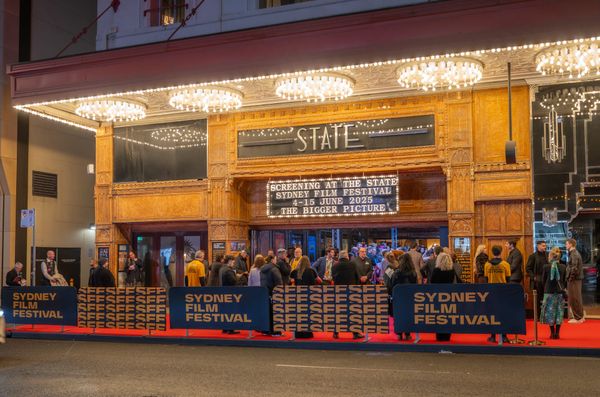
Walking out of a short film festival after a sci-fi block, there's a particular kind of conversation that happens in the lobby. The lights come back up, people start talking about the film, and then the conversation quietly shifts. Someone mentions how unsettling the technology felt. Someone else talks about a character's loneliness. Then someone says the film wasn't really about the future at all. It was about right now.
These moments are small, but anyone who has spent real time in the short film world will recognize them. Because what science fiction films have been doing for years is exactly this: pretending to talk about the future while making the present visible.
From the outside, the genre still conjures certain images. Spaceships, robots, dystopian cities, artificial intelligence systems, advanced machines. But spend time inside the independent short film ecosystem and you start to see that the genre is doing something else entirely.
For short film directors especially, sci-fi is rarely about technology. It's about human behavior, and the direction that behavior is evolving toward. Maybe that's why, looking at the science fiction short films circulating through festival selections in recent years, a common feeling emerges: humanity running after something that's moving faster than it can keep up with. And the question that follows almost inevitably: are sci-fi films actually preparing society for the future? Or are they amplifying fears that are already growing inside us today, fears we haven't quite found the words for yet?
What Is a Sci-Fi Film, Really?
Defining science fiction is harder than it appears. The technical definitions describe it as stories set in the future, alternative realities, or worlds shaped by advanced technology. Those definitions aren't wrong. But in the world of short film, the genre tends to work differently.
Because a good science fiction film doesn't show you a new device. It asks you a new question. What if things were different? What if machines started making decisions for us? What if people no longer needed each other physically? What if the more connected we became, the less intimate we actually were?
Sci-fi operates exactly here. It doesn't show you the future. It tests human behavior under different conditions. For this reason, at the center of science fiction cinema sits not technology, but human psychology.
Independent short film directors have known this for a long time. In short film production, building a big question is more valuable than building a big world. A short film set in a single room can leave behind a larger idea than a million-dollar production. That's the format's specific power, and it's why sci-fi and short film fit together so naturally.
Why Do Short Film Directors Choose Sci-Fi?
It's not a coincidence that many directors who begin making short films eventually find their way to science fiction. From the outside, it looks like a creative preference. But on the production side, there's another reality at work. Sci-fi creates a wider field for metaphor.
Independent directors often don't want to tell a contemporary story directly. Because direct narratives can age quickly. Technologies change, the news cycle moves on, social debates transform. But when you carry the same fear into the future, the story can last longer.
The short film Connected, featured on the ShortFilmBox YouTube channel, is a useful example of this. The loneliness at its center could be told through phone addiction or screen dependence. Or it can be told in a future where human minds are connected to neural networks. The second version looks like a technology story, but what it's actually exploring is loneliness. That's one of the core reasons short filmmakers keep returning to sci-fi. The genre gives a director the chance to carry a contemporary issue onto a more universal foundation.
Walk through the corridors of any short film festival and the same themes keep surfacing underneath the stories. Control, identity, intimacy, addiction, loneliness, and the fear of human transformation. We keep circling the same axis. Sci-fi gives us different terrain to circle it in.
Does Technological Change Frighten People?
History is quite clear on this. The answer is yes, but people are less afraid of technology itself than of the speed of change. Because the human mind doesn't get along well with uncertainty.
During the Industrial Revolution, machines were going to destroy jobs. Television was accused of ruining family life. The internet was going to eliminate human relationships. Social media was going to end real friendship. Today, similar fears orbit around artificial intelligence. What's interesting is that these fears almost always arrive before the technology becomes part of everyday life.
People are not afraid of things that have already happened. They're afraid of possibilities. And this is exactly where cinema enters the picture. Because society processes certain fears not through news reports but through stories. A news article gives us information. A film shows us the emotional impact of that information on a human being. And people respond to emotion more reliably than they respond to facts. This is why sci-fi films sometimes operate less like entertainment and more like a social stress test.
Do Sci-Fi Films Actually Prepare Society for the Future?
Something similar happens every time a major technological shift occurs. A new tool appears. People are excited. Then there's a brief silence. Then an invisible unease begins. We've seen this cycle play out before with the Industrial Revolution, with the spread of the internet, with smartphones transforming everyday life, with social media, and now with artificial intelligence.
Technology enters our lives quickly. Society follows at a slower pace. What's interesting is that cinema sometimes notices this gap before the academic papers do. Short film especially has been doing this for a long time.
Look closely at the science fiction short films circulating through festival selections and you'll notice that stories appearing to describe the future are actually about the present. A world where a character is managed by algorithms. The loneliness of people who are perpetually connected. A narrative built around the relationship between humans and machines. The surface describes tomorrow. But underneath, the conversation is about who we are today.
Independent short film directors, unlike the major studio systems, aren't trying to build the future. They're trying to make today's invisible fractures visible. Short film production is inherently concentrated. Directors focus on a single emotion, a single fear, a single question rather than building expansive worlds.
The Gap Between Technological Speed and Human Adaptation
Perhaps one of the most significant fractures we're living through right now sits exactly here. Technology moves forward in a linear progression. Human behavior doesn't move at the same rate. New tools settle into our daily lives within months, but our ethical reflexes, our social behaviors, and our emotional adaptation don't change at the same speed.
Artificial intelligence advances while ethical systems lag behind. Tools for connection multiply while the feeling of loneliness doesn't disappear. Communication becomes easier while people understand each other no better than before.
The discomfort in sci-fi films comes partly from this. What we see on screen isn't technology. It's humanity that can't keep pace with itself. Short film directors tend to feel this a little earlier than most. Independent producers notice small behavioral shifts quickly. In festival presentations, in creative meetings, in project proposals, the same questions keep coming around.
Is it normal to be this connected? What has real intimacy become? Are we actually making our own decisions? These questions look like technology questions. They're human questions.
Are Technological Anxieties Being Expressed Through Film?
Cinema has long been the space where society says the things it can't say out loud. In some eras, it was war anxiety. In others, surveillance culture. In others, loneliness. Sci-fi provides a safe container for carrying these things.
Because talking about today directly is hard. But talking about tomorrow is more comfortable. For this reason, many sci-fi films aren't describing the future. They're mapping the psychological terrain of the present. Directors take feelings we haven't named yet and make them visible. This is exactly why, in the short film world, sci-fi was never just a genre preference. It became a way of observing.
Do Sci-Fi Films See the Future, or Do They See Us?
Looking back, many sci-fi films appear to have anticipated certain technologies in striking ways. But perhaps that's not actually where the real achievement lies. Sci-fi doesn't predict technology. It predicts human behavior. Because technology changes. But people repeat certain core responses. First we're afraid. Then we're amazed. Then we adapt.
Short film directors tend to notice this cycle a little earlier than others. Maybe sci-fi films aren't preparing us for the future at all. Maybe they're preparing us for ourselves. Because we don't know what the future will look like, but we now know something about how people behave in the face of change. Cinema has been keeping a quiet record of that for a long time.
Why Do Directors Escape to the Future?
Spending time in the short film world, an interesting pattern becomes visible. When directors want to tell a story about the present, they often don't tell it directly. At first, this seems contradictory. Today's issues are already powerful enough. Loneliness, digital dependency, anxiety about AI, the pressure of visibility, the exhaustion of living in a state of constant connection. All of this is already today's reality.
Creative people often prefer to look at a subject from a few steps back. Because when you're inside the present, it's hard to see it clearly. Sci-fi creates a safe distance for the director. A story moved into the future frees up today's conversation. A director who wants to explore the fragility of human relationships can build that entirely around two characters. But when the same story is moved into a world where human minds are connected through neural networks, the question grows. It stops being about two people and becomes a question about a society.
Maybe that's why sci-fi work at short film festivals doesn't operate only as genre cinema. It tends to become the space where filmmakers carry their social intuitions. Because directors aren't always describing the future. They're describing feelings that don't yet have a name.
Where Does the Pulse of Sci-Fi Actually Beat?
For short film producers, one of the most valuable things isn't only making films. It's being able to see what other directors in the same moment are thinking about. Because creative tendencies rarely become visible in a single film. They emerge when films are placed alongside each other.
This is one of the genuinely interesting qualities of a festival selection. Films don't just tell stories. They carry the shared anxieties of a specific moment. Looking at short films from different countries over the course of a year, you notice certain themes surfacing again and again. In one period, surveillance narratives multiply. In another, stories centered on artificial intelligence proliferate. Then narratives orbiting connection, loneliness, and the human-technology relationship start becoming visible. These repetitions are not coincidental.
Short film directors often sense changes that society hasn't started talking about out loud yet. And to see those changes, watching a single film isn't enough. You need to see the pattern.
This is one of the things Cineshort makes possible in a specific and interesting way. The platform doesn't only function as a place to watch short films. It also offers the chance to see a shared map of stories arriving from different countries and different creative perspectives. Browsing through the sci-fi category in particular, a recurring feeling surfaces: directors are less interested in imagining the future than in trying to understand the present.
For short film producers, sometimes the most valuable research isn't new technology headlines. It's seeing which questions other directors are asking. Because new ideas often come not from answers, but from the unsettling question that a film leaves behind.
What Do Rise and Connected Tell Us?
Short film platforms are no longer only viewing spaces. They're also places to read creative tendencies. Rise, available on Cineshort, and Connected, featured on the ShortFilmBox YouTube channel, offer interesting examples of this. What matters here isn't only what these films say. It's what they choose to ask. Because short film directors don't choose fears randomly. They choose the invisible tensions of their moment.
The powerful message in Rise: will humanity one day hand over its fate to robots and artificial intelligence? In short, whether we'll lose control if technology crosses the boundary of human capacity.
Looking at Connected, technology appears to be at the center, but other questions circulate underneath. The cost of being connected. The loss of the sense of control. The transformation of human relationships. The effect of the system on the individual. The film asks what we're actually connected to, and whether the freedom we've surrendered corresponds to what we've gained.
Good sci-fi short films don't celebrate technology or condemn it. They only ask questions. A good short film usually doesn't answer. Because answers age quickly. Questions stay and keep getting asked.
Cineshort and the Short Film That Keeps Living
Whatever genre of short film you produce, Cineshort stands beside it. For sci-fi short filmmakers specifically, the platform offers something the genre particularly needs: real international reach.
With subtitle support in close to twenty languages, a sci-fi short film becomes localized, genuinely positioned for a global audience rather than limited to the communities that already speak its language. Through the Smart-Hub model, the film enters circulation across a range of channels simultaneously: digital platforms, airline in-flight entertainment systems, television channels, and curated screenings. The film stays in active distribution for an extended period rather than disappearing after a festival run.
The process starts with a $49 submission fee. If your film is accepted, a one-time onboarding fee of $49.99 covers technical quality control, metadata, marketing materials, and full readiness for pitching across the buyer network. Licensing offers arrive in your Cineshort Dashboard within seven days, with complete terms visible before you make any commitment. If you accept an offer, a delivery fee of $0 to $149 applies (typically $49.99), always disclosed before you confirm. Revenue splits 50/50.
Whether you're a viewer looking for sci-fi short films with real weight, or a filmmaker whose film deserves to stay in circulation long after its festival run, Cineshort is waiting for you.
You keep making great films. Cineshort handles the rest.