Eastern Cinema, Symbols, and Hong Kong Film Festival: The Art of Telling the Invisible

By Birgül Tombul • ShortFilmBox Blog
What comes to mind when we say Eastern cinema? Time moving more slowly, quieter people, more emphasis on the natural, isn't that right? So what comes to mind when we say Western cinema? Emphasis on fast time, action and violence, constantly escalating tension, and major climaxes.
How diametrically opposite they appear. As if there aren't kilometers between them but completely differently constructed worlds. Actually, the difference is our ways of perceiving and reading the world, our lifestyles. All these differences are the most important factors that also form our cinema language.
Cinema is both a way of storytelling and at the same time a way of thinking. In this context, Eastern cinema, unlike Western cinema, establishes a language that does not direct the viewer but invites the viewer to think and directs them to look beyond the visible.
This cinema understanding where dialogues are few, silence is intense, and feeling rather than narrative comes to the fore develops a unique narrative system through symbols and metaphors.
The fundamental characteristic of Eastern cinema is the use of symbols and metaphors, and the Hong Kong Film Festival plays a critical role in this cinema tradition's international visibility.
Eastern Cinema: More Than an Aesthetic
When we say Eastern cinema, we are not talking about a single country or a homogeneous structure. Although cinemas of different cultures such as Japan, South Korea, China, Iran, Taiwan, and Hong Kong are mentioned under this title, there are some common aesthetic and philosophical approaches that bring these cinemas closer together.
After all, these countries we listed are culturally similar and have a common behavioral pattern. Therefore, their ways of perceiving life and conveying it through art also resemble each other and belong to an aesthetic cluster.
At the foundation of this approach and aesthetic cluster are these elements:
- Minimalism: Avoiding unnecessary dialogues. A cinema where we can see the best examples of show-don't-tell application.
- Flexible use of time: Focusing on the feeling of the moment rather than the story is at the forefront.
- Relationship with nature: The use of space as a character is quite intense.
- Internal conflict: Psychological depth and internal reckoning are processed more intensely instead of external action.
For example, in Yasujirō Ozu's cinema, the camera is mostly static, there are no dramatic explosions. But the viewer feels a great emotional break even in an ordinary family scene. Because Eastern cinema tells the dramatic not by shouting but by whispering. In fact, it doesn't tell, it shows. This also creates a strange catharsis. Now the viewer has also become part of that scene.
Symbol and Metaphor: Eastern Cinema's Secret Language
Perhaps Eastern cinema's most powerful aspect is that it avoids direct narration. Instead, it constructs a multi-layered world of meaning through symbols and metaphors in narration.
This situation is not just an aesthetic choice; this style is not chosen just to be more beautiful. This form of expression is also a cultural heritage. Daily life expression is also this way. Especially thought systems like Taoism, Buddhism, and Confucianism encourage indirect expression instead of direct expression. Therefore, this teaching is reflected in cinema language and turns into a message delivery method.
Nature Symbols: As If Reflections of the Inner World
In Eastern cinema, nature is not used just as a simple background. It gives a powerful message as an extension of the characters' state of mind.
- Rain: Purification, melancholy, suppressed emotions
- Wind: Change, uncertainty
- Water: The flow of time, life's continuity
- Fog: Uncertainty, identity loss
- Snow: Innocence, uncertainty, purification
For example, in Wong Kar-wai films, rain is almost the visual equivalent of loneliness and unreachable love. Especially in the film Fallen Angels, this atmosphere created with snow tells what the characters cannot say. Uncertainty, innocence, and an internal purification. There are no words, but there is a more powerful metaphor. Season...
Conveying Confinement and Freedom with Space Usage
In Eastern cinema, spaces are symbolic. Small rooms, narrow corridors, crowded cities... All of these reflect the characters' internal states.
- Narrow areas: Suppressed emotions
- Open areas: Freedom or loneliness
- City: Modern alienation
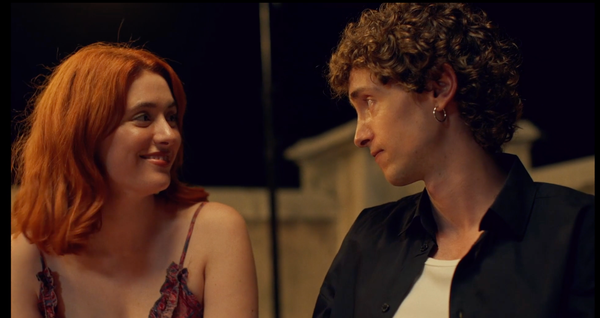
Especially in Hong Kong cinema, the city is a metaphor for the individual stuck between speed and loneliness. For example, in the short film In Full Bloom, the space and change in space wonderfully convey a mourning process. That huge hole opening inside the room actually conveys in such a beautiful and aesthetic way the emptiness felt after the loss of a loved one.
Objects Are Silent Narrators
While dialogues are at the forefront in Western cinema, in Eastern cinema objects speak.
- A tea cup: Routine, tradition, traditional perspective
- Empty chair: Loss, death
- Clock: The passage of time and missed opportunities
These objects construct the story's subtext. It is not "told" to the viewer; it is "made to be felt." It activates empathy and the viewer becomes an active part of the film.
Silence: The Most Powerful Metaphor
In Eastern cinema, silence is not an emptiness but meaning itself. Silence:
- Represents what cannot be said
- Increases emotional intensity
- Makes the viewer active
This is why watching Eastern cinema is not a passive experience but an active interpretation process.
Time in Eastern Cinema: Non-Linear Narrative
In Western cinema, time mostly progresses linearly. Beginning, development, conclusion. The beginning and end are clear. Therefore, it is easy to follow.
In Eastern cinema, however, time is:
- Cyclical
- Fragmented
- Sometimes almost stops
This approach is quite evident especially in modern Eastern cinema. Not the flow of time but the feeling of time is important. Cyclical time creates an atmosphere of eternity. Thus, in life, one always passes from one period to another. No situation is permanent. Every situation is temporary.
Hong Kong Cinema: A Bridge Between East and West
Hong Kong cinema has a special place within Eastern cinema. Because it combines both Eastern symbolic expression and Western dynamic editing. It creates a more hybrid but more watchable structure in every geography.
This cinema has faster editing but at the same time contains an intense emotional subtext. It centers modern city life in narration. Directors like Wong Kar-wai, John Woo, and Ann Hui are the strongest representatives of this hybrid structure. We can also say that this narrative style is preferred more than the classical Eastern film understanding.
Hong Kong International Film Festival: Eastern Cinema's Showcase
The Hong Kong International Film Festival (HKIFF) is one of Asia's most established and prestigious film festivals. Organized since 1976, the festival is both a screening space and a cultural meeting point.
The festival is organizing its 50th-year event this year. It is a very important organization for Eastern cinema, and participation is also quite intense.
The Festival's Fundamental Role
HKIFF's importance for Eastern cinema can be summarized in a few headings:
Providing Global Visibility
HKIFF plays a critical role in Eastern cinema's recognition internationally. Many directors are discovered here for the first time.
Opening Space for Independent Cinema
The festival focuses on independent films rather than major studio productions. This is a great opportunity especially for short filmmakers.
Building Cultural Bridges
HKIFF establishes a cinema bridge between East and West. Industry professionals from Europe and America meet Asian filmmakers here. This means serious network connections.
Short Films and Symbolism: Intense Narrative in Eastern Cinema
Short film is one of the formats most suitable for Eastern cinema's language. Because:
- It requires saying a lot in a short time
- It necessitates the use of symbols and metaphors
- It establishes a direct connection with the viewer
For this reason, short film selections at festivals like HKIFF generally contain the most experimental and most powerful narratives.
Why Is Eastern Cinema More Difficult But Deeper?
The reason Eastern cinema is found "difficult" by some viewers is that it breaks familiar narrative patterns. Nothing is explained clearly. The viewer is expected to interpret and be included in the narrative. Rather than story, atmosphere, space, and colors—in other words, the meaning all of these express—are important.
But this is exactly why it is deeper. Because the viewer doesn't just watch the film; they become part of it. Now with Eastern cinema, the viewer also exits linearity and becomes included in a cyclicality.
The Rise of Eastern Cinema in the Modern World
In recent years, Eastern cinema has begun to receive more attention on a global scale. There are several reasons for this:
- Western narrative repeating itself
- The need for new narrative forms
- The widespread use of digital platforms
- Discovery of a life perception different from our own world understanding
Festivals play a major role in this rise. Especially HKIFF is a platform that constantly feeds this visibility. It is a festival that also makes great contributions to the cinema industry.
A Cinema That Teaches Seeing the Invisible
Eastern cinema does not offer the viewer ready answers. It asks questions. It leaves gaps. And it wants the viewer to fill those gaps.
Symbols, metaphors, silence, and flexible use of time... All of these take Eastern cinema beyond being just a viewing experience and transform it into a thinking and feeling practice.
The Hong Kong International Film Festival is one of the most important gateways of this practice opening to the world. Discovering new voices, making different narrative forms visible, and a center that brings Eastern cinema's depth together with the global viewer.
Today, when you watch an Eastern film and say "nothing happened but I felt a lot," actually that film has achieved its purpose. Because Eastern cinema doesn't tell you a story. It leaves you a feeling. It creates a catharsis. This is as important and beautiful as telling a story.
In Conclusion: The Fine Line Between Telling the Invisible and Being Visible
Eastern cinema pursues not narrative but meaning. It speaks with symbols, deepens with silence, and transforms the viewer from a passive consumer to an active interpreter. This is why every Eastern film is actually not a single story but a multi-layered experience rewritten for everyone watching.
However, in today's cinema ecosystem, merely "narrating well" is not enough. At the same time, it is necessary to be visible in the right place, in the right way. Because especially in short film, meeting the right audience is very important for the film's broadcast life. When the film does not meet the right audience, it both cannot generate revenue and cannot be discovered in the chaos and gets lost.
This is where platforms like the Hong Kong International Film Festival come into play. While such festivals enable Eastern cinema's symbolic and deep narrative language to meet an audience that understands it, they also serve as a critical threshold for new filmmakers to be noticed on a global scale.
But the festival journey is often a beautiful beginning for a short film. The real issue is the film's life after the festival. The issue of whether it is included in a correct and strategic distribution network after the festival is quite important. Cineshort is a global distribution platform focused only on short film. It makes strategic distribution in 20+ places. From digital platforms to airline companies, from collective screenings to ticketed and curated programming, it makes strategic distribution in many places. With subtitle support in nearly 20 languages, it also eliminates geography and language barriers.
One of the biggest challenges for short film producers is that the film is not limited only to festivals. It can continue to meet different audiences in different geographies. Because Eastern cinema's layered narrative is not something to be consumed in a single screening and needs to be discovered over time.
At this point, new-generation distribution and visibility models that have emerged in recent years are opening different doors for short film producers. An ecosystem where films are designed not only to be selected but to continue living is gaining increasing importance. Platforms like Cineshort have begun to offer infrastructures that enable films' circulation in multiple markets, re-watching in different languages and cultures, and connection to a sustainable revenue model.
Such structures are critical especially for short films carrying Eastern cinema's symbolic narrative. Because these films often reveal their true meaning not at the first viewing but at the second or third encounter. Therefore, the issue is no longer just about which festival the film will be selected for. The real question is: "How long can my film live and how many different viewers can it establish a real connection with?"
For today's short film producer, success is not limited to entering a festival selection. Putting their film into circulation in the right contexts, bringing it together with the right audience, and spreading their narrative over time is more at the forefront.
Eastern cinema teaches us this: The most powerful meanings are hidden in what is not said directly. Similarly, the most powerful careers often arise not from a single moment of visibility but from a sustainable and strategic journey.
Cineshort is completely by the short filmmaker's side on this journey. With various platforms, numerous subtitle support, and a visionary perspective, not only your current film but your next films' journey also begins in a sense. Because each film becomes a serious reference point for the next film. The current film meets the right audience, and the next film is eagerly awaited. The short filmmaker's career journey also rises with wonderful momentum this way.
In short, with Cineshort, your film embarks on a long journey after festivals.
© 2026 ShortFilmBox — shortfilmbox.com