Festival Strategy for Short Filmmakers and the Cineshort Perspective

We are going through a glittering period when major festivals are held one after another. Festivals are very valuable screening spaces for short filmmakers, more accurately, a unique showcase. The dream of every short filmmaker is for their film to appear in this unique showcase and perhaps even win an award. But for these dreams to become reality, how should the short film production process be, what should be paid attention to when applying to festivals, and perhaps most importantly, what roadmap should be drawn after the festival and how should one move forward on that road?
Producing short film, beyond being a creative expression space, is a powerful tool that can shape your career with the right strategy. However, the reality is that producing a short film is only half the process. What really makes the difference is that film reaching the right festivals, being positioned properly, and the post-festival process being managed professionally.
- Should festivals be considered during film production?
- How should one prepare for festivals?
- What should be paid attention to during the festival process?
- How should the short filmmaker proceed after the festival?
This guide has been prepared not only for those who want to produce "festival-winning films" but for everyone who wants to build a sustainable short film career. Preparing for the festival and knowing what to do afterward is truly very important. Don't worry, you will find answers to all your questions in this guide.
Should Festivals Be Considered When Making a Film?
This question is one of the most debated topics in the short film world. The clear answer is yes, but not in the wrong way. Naturally, you want your film to appear, compete, and even win awards at prestigious festivals. But short film is not a product made only for festivals.
Making Film for Festivals, or Making Film Suitable for Festivals?
Many directors fall into the "festival film" cliché, focusing on formula rather than story. This approach may bring selection success in the short term, but in the long term it weakens your creative identity.
The right approach: First clarify the story you want to tell, then make this story suitable for festival circulation. What matters is that your story is strong. That the work you do is quality and creative. Let your story and work be good, then afterward let it circulate in the festivals you want to apply to.
Here the most important part is being skipped. The importance of a good and creative screenplay. What makes the film impressive is the power of its screenplay. You must work intensively on the screenplay. The most important reason a film of a few minutes is impressive is that it focuses directly on the message and uses symbols and metaphors. Making the message layered is quite important. Emotion should definitely be brought to the forefront more.
What Do Festivals Look For?
Festival selection criteria generally take shape on these axes:
- Originality and creative vision
- Director's voice
- Thematic depth
- Technical competence (cinematography, sound, editing)
- Relationship with current or universal issues
But there is a critical point here. Festival programmers do not seek perfection, they seek the meaningful. It is important criteria that the message you want to give is universal, interesting, and that the viewer identifies with it.
Cineshort Perspective
The Cineshort approach recommends positioning the film not only for festivals but for multi-channel distribution and revenue model. In other words, the film should be suitable for festival circulation, work on digital platforms, and be understandable in the international market. Rather than a local problem or message, the message should definitely be universal.
For this reason, these questions should be asked even at the production stage: Is this film understandable in different cultures? Is dialogue dependency too much? Can it maintain its impact with subtitles? Cineshort eliminates the limitations brought by borders with subtitle support that increases in number every day. Your film's creative atmosphere should also maximize subtitle support.
How Should One Prepare for Festivals?
Festival success is largely determined in the preparation stage. In fact, we can even say at the idea stage. Because festival success is not a gain obtained randomly; it is the result of a process. The festival process begins at the idea stage, continues with a good screenplay and good planning. The entire process must be planned strategically.
Building the Right Festival Strategy
Not every film is suitable for every festival. When creating a festival strategy:
- A-list festivals (high prestige, low acceptance rate)
- Medium-scale festivals (balance point)
- Niche/thematic festivals (high acceptance probability)
Such a distribution should be made.
Another point to pay attention to is deciding which of local and international festivals to apply to. In first films, short filmmakers generally prefer local festivals, while when a bit more experience is gained, they prefer to turn to global and more prestigious festivals. In my opinion, this is the right choice. After all, every festival is a space of experience.
Premiere Status Is Critical and Should Be Paid Attention To
Many major festivals want world, international, or regional premieres. For this reason, sharing the film online early can be a major mistake. Festival rules must be known and specifications must be read carefully.
Another important point is that festival sequencing should be done correctly. Planning in what order you will participate in festivals is also quite important. Because while some festivals do not accept previous publication, the condition of some festivals is that it must remain published for one year.
Technical Preparation
One of the most common reasons for elimination in festival applications is technical deficiency. The probability of accepting a film with weak sound mix, insufficient color correction, or faulty subtitles is negligibly weak. In fact, this can even be counted as a sign of carelessness for the short filmmaker and is not well received.
Minimum standards:
- DCP or high-quality digital output
- English subtitles (professionally prepared)
- Clean sound design
Application Materials Are Very Critical
Application is not just the film.
Required materials:
- Logline (one-sentence strong summary)
- Synopsis (short and long version)
- Director's statement
- Press kit (EPK)
- Poster
- Trailer
Many good films are eliminated due to poorly written synopsis. These requested materials are mostly materials requested at festivals, but not standard materials requested by every festival. In each festival's specifications, the section on what kind of film to apply with is written. These sections must definitely be read carefully and preparations must be done meticulously.
Timing and Budget Management
Festival applications are costly. Therefore, the strategic approach should be:
- Use early bird periods (Early applications are often cheaper)
- Allocate budget to priority festivals
- Update strategy according to feedback
What Should Be Paid Attention To During the Festival Process?
The film being selected is not the end of the process but the beginning. I frequently remind this because the biggest misconception comes from here. The short filmmaker looks at it as if the process is finished when the film is selected for the festival. However, quite the opposite, the film's journey already begins when the film is selected for the festival. The festival is only the film's starting point. What to do after the festival should also be considered and planned before festival application.
Networking Is As Important As the Film
The festival environment is the most powerful space for meeting producers, distributors, and programmers. Here you have the opportunity to meet industry professionals within the short film and general cinema ecosystem. These meetings can provide you with connections you never expected and will definitely broaden your horizons. Coming together with other short filmmakers is also quite motivating.
What should be done:
- Active participation in Q&As
- Business card and contact information sharing
- Ability to pitch your film
How Should You Present Your Film?
When telling about yourself and your film, definitely be brief and clear, emphasize your perspective not the theme, and don't get bogged down in technical details. What matters here is that you as a short filmmaker present your perspective. In fact, rehearsing such conversations in free time can make your speech more fluent and proper.
Social Media and Visibility
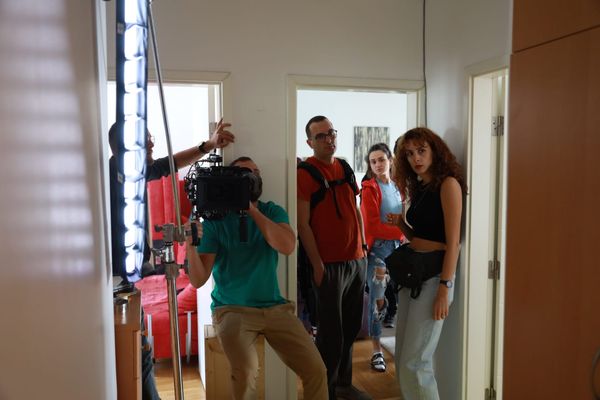
During the festival process, social media posts, press interviews, and use of festival tags for visibility definitely increase your film's impact. Especially set images, actor photos, and behind-the-scenes posts on your social media will definitely attract interest. The viewer's interest is quite strong in these directions.
Winning Awards Is Not Everything
One of the biggest misconceptions is the thought "If it didn't win an award, the film is unsuccessful." The reality is that many films start a great career without winning awards. Another important point is that the right connections are definitely more valuable. Winning an award at a festival means your film is one of the listed films. In other words, if the list is ten films, your chance is one in ten. How can not winning an award make your film unsuccessful? The right connections and strategic moves made after the festival will take your film to a much higher level.
Post-Festival: The Real Game Starts Here
Many directors do not know what to do after the festival tour ends. Yet the most critical stage is here. Because for short film, the real journey begins after the festival process ends with accumulation in the distribution process. Distribution is a stage that needs to be well planned in itself.
Short film distribution is different from feature film, and platforms with a global distribution structure focused especially on short film should be preferred. Cineshort offers short filmmakers a multi-channel distribution model opportunity with Smart Hub and puts short film into circulation in many different areas.
Creating Distribution Strategy
Post-festival options:
- Digital platforms
- TV and airline sales
- Educational licenses
- Special screenings
Cineshort Approach
Cineshort removes short film from being only a festival product. Short film is now an artistic product that will generate revenue. This is a very important distinction. Because when short film is looked at only from a festival or art film perspective, you really need to put it aside after the festival. You eliminate its revenue-generating potential. If you look at it only as a commercial commodity, the things you can do individually are very limited. Because film screening requires a strategic roadmap.
We can list some of the advantages Cineshort provides to short filmmakers as follows:
- Global distribution at 20+ points
- Multiple revenue model
- Subtitle and localization support
- Sales/rental on own platform
- Geo-blocking and IP protection
- Ease in festival applications
Of course, these can vary according to conditions. For example, subtitle support that was initially 6 has now approached 20. Cineshort has a structure that constantly develops and updates itself. For this reason, I cannot create a definite list saying its support is these. But all the support is in favor of the short filmmaker. I can say this with peace of mind.
Creating Digital Presence
When listing what needs to be done after the festival, we can say the following. First of all, creating an IMDb page, i.e., a record, is very important. Because I have seen many directors who do not open an IMDb page after finishing the film, and this is perceived as extremely amateur work. After the festival or screening, you must definitely open your IMDb page and enter all necessary information correctly into the system. This will show you both more professional and more careful and respectful toward your work.
First of all, your film gains an official identity. This is important in terms of your effort, career planning, and perspective on your film. It is a detail that will be very useful in festival applications. It is also a very prestigious reference for actors and crew. Another important point is that when your short film is searched on Google, the appearance of the IMDb page will make the film more attractive. IMDb does not accept every project. The film must be completed and expects it to have been shown at a festival, online, or on a platform. Let's add this detail as well.
On the IMDb page, there is generally film name, production year, genre, duration, subject summary, actors, crew, poster and images, trailer, language and country information, and finally festival/award information.
Transition to New Project
The festival tour is not an outcome but a springboard. When this stage is reached, a new project is now developed, connections established at the festival are used, and the search for financing for the new project begins. The process starts from the beginning again and enters a planning period from the very beginning. All the experience gained from the previous film is a guide.
In Conclusion: Short Film Is Not a Product, It Is a Strategy
Producing short film is no longer seen only as an art practice. Short film is also a strategic career move. In this career move, there is a multi-parameter equation involving the short filmmaker, the short film, and the viewer and sector. So if you have a creative perspective for the film we have prepared and if you see short film as a communication tool expressing your perspective on life, we can say your film should work for you for a long time.
If you produce the film with only a festival goal, at the end of the road you will only have a few screenings. But if you position the film within the integrity of festival, distribution, revenue, and career, short film becomes not a door but definitely a system for you.
The Cineshort perspective defends exactly this. Prepare your film not for a single stage but for the whole world. Because today short film is no longer only watched. It is distributed, sold, discussed. And with the right strategy, it undoubtedly builds careers.
Cineshort is by your side. Don't let your film remain stuck in a festival vise. It is working so that your film builds your career process, brings you revenue, and meets the right audience in more places. Then we can say with peace of mind: Your film's journey did not end after the festival screening. With Cineshort, your film is now embarking on a long journey.
Author: Birgül Tombul
#shortfilm , #shortfilmdistribution , #shortfilmstreaming , #shortfilmsales
© 2026 ShortFilmBox — shortfilmbox.com