What Is Short Film, Why Is It Made, How Is It Shot, and Who Is It For?

Understanding Cinema's Freest Form
By Birgül Tombul • ShortFilmBox Blog
Cinema's freest, most experimental, and often most creative space is short films. The world of short film, which shows that powerful stories can be told even without large budgets, complex production structures, and massive crews, is an indispensable narrative form for both beginning filmmakers and experienced directors.
Today, many directors begin their careers with short films. For filmmakers who want to quickly bring an idea to life, develop an aesthetic language, or tell a story briefly but effectively, short film is an ideal tool. Moreover, with the development of digital platforms, the ways short films reach audiences have increased more than ever before.
The questions of what short film is, why it is produced, how it is shot, and who it is for still puzzle some people. When short film is discussed in a community, someone inevitably asks one of these questions: "What is short film, is it something like a video, who is it made for, does it have a story?"
If you want to understand the world of short film, produce a short film, or build a career in this field, this guide has been prepared for you and will serve as a comprehensive starting point.
What Is Short Film?
Short film is a term used to describe cinema works whose duration is shorter than feature films. Generally, films under 40 minutes fall into the short film category. However, for most festivals and platforms, this duration typically ranges between 5 and 20 minutes. In short, we can say films between 1 and 40 minutes. Because I have also watched one-minute but exceptional short films.
Duration is not the only thing that distinguishes short films from feature films. The narrative form, story structure, and creative approach are also different. Short film often concentrates around a single idea. The story progresses more quickly and aims to leave a powerful impact on the viewer in a short time. The moment is important, and the story's climax is reached quickly.
In short film, every scene, every dialogue, and every image has a purpose. Because time is limited and there is no room for unnecessary details. For this reason, short film narrative is generally more concentrated and more focused. Perhaps this is why the emotion evoked in the viewer by a good short film is not easily forgotten.
Short films can be in many different genres:
- Fiction short films
- Documentary short films
- Animated short films
- Experimental short films
- Hybrid narratives (Artificial intelligence, which has entered our lives never to leave, provides quite significant help in producing short films in this genre.)
This diversity also makes short film one of cinema's freest spaces.
Why Is Short Film Made?
There are many different motivations behind short film production. While some directors see short film as a learning space, for others this form is an artistic expression in its own right. Sometimes it is simply that the director has no other option to convey the message they want to give or show a social problem they want to address.
The Need to Tell Stories
At the foundation of cinema is storytelling. Sometimes the story you want to tell does not need a long film. A single moment, a single character, or even a single emotion can create a powerful short film. Short film is an ideal narrative space for such stories.
Gateway to Cinema
Many directors begin their careers with short films. Because producing feature films requires large budgets, strong producers, and large crews.
Short film offers a much more accessible production space. It is possible to produce a short film with small crews, low budgets, or sometimes even alone. For this reason, short film is often a starting point for young filmmakers.
Space for Experimentation
Short film gives the filmmaker freedom to take risks. Many creative processes such as trying new narrative forms, developing visual language, testing camera techniques, and creating editing styles can be experimented with through short film.
Taking risks in feature films can often be costly. However, short film offers the opportunity to experience these risks more safely.
Festival Journey
There are thousands of local and global film festivals worldwide, and a significant portion of these include categories dedicated to short films.
Festivals create opportunities such as visibility for short films, establishing and joining an international communication network, meeting producers, developing new projects, and perhaps the most important opportunity for a short film producer—networking.
A short film can sometimes completely change a director's career.
Creative Freedom
Short film is cinema's freest form. Because there is often no commercial pressure. Directors can focus on the stories they want to tell rather than audience expectations.
For this reason, short films often become bolder, more experimental, and more personal.
How Is Short Film Made?
Making a short film goes through a process similar to feature film production. However, it takes place on a smaller scale. Nevertheless, the planning process for producing a feature film applies exactly the same to short film.
This process generally consists of these stages:
Finding the Idea
Every film starts with an idea. A short film idea generally arises from a single question: "What if something like this happened? What would happen if a character encountered such a situation? How can I tell this emotion visually?"
Or we notice some systemic problems in the society we live in or globally, and we are uncomfortable with them. Like war, climate problems, or gender issues. At precisely this point, short film's independent structure has unique value in making these problems visible.
The most important thing when developing an idea for short film is finding a simple but powerful concept. Too many characters or complex plot may not be suitable for short film.
Screenplay Writing
A good short film is based on a strong screenplay. After all, you must fully convey all the message you want to transmit to the viewer in a short time. Therefore, you must be quite creative, use symbols and metaphors appropriately, and sometimes convey the message through perhaps a season change without needing words.
There are some fundamental points to pay attention to when writing a short film screenplay. If we list a few of them, first be economical in narrative. Time is limited in short film. Therefore, every scene must move the story forward. Nothing that does not serve the purpose should enter the screenplay.
Short film should have a single focal point. A good short film generally revolves around a single event or emotion.
Your short film should have a strong ending. Most short films end with a conclusion that affects the viewer. This can be a surprise, an emotional outburst, or a powerful visual. Additionally, as I just mentioned, you do not have to use words. The "show, don't tell" technique often works.
Pre-Production
The preparation stage before filming is pre-production. During this process, casting is done, locations are determined, the shooting plan is prepared, the crew is formed, and the budget is planned.
Good preparation definitely makes the shooting process much more productive.
Shooting Process
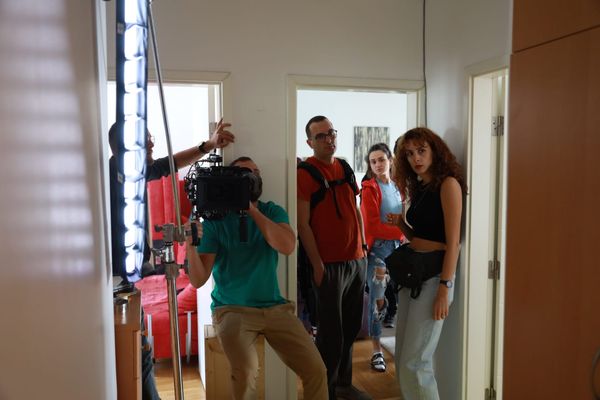
The shooting stage is the point where the film is actually produced. Short films are generally shot within a few days. Shootings are conducted with small crews and use limited locations.
However, it should not be forgotten that these limitations often give birth to creative solutions.
Editing and Post-Production
After shootings are completed, the film enters the editing stage. During this process, image montage is done, sound design is prepared, appropriate music is added, and color correction is performed.
Editing is one of the most critical stages that determines the film's rhythm and emotion.
Who Is Short Film For?
Short film is not only for cinema students or new directors. It actually appeals to quite a wide audience.
Short film is the most important learning space for new directors. Through short film, a director learns set management, experiences teamwork throughout the shooting period, and develops visual narrative language. This experience forms the foundation for larger projects.
However, some directors do not see short film only as a starting point. For them, short film is an art form in its own right. Experimental cinema often emerges in short film format. Because the cost of a cinema film often does not provide the opportunity to allow new experiments.
In film schools, short film production is an important part of education. Students produce short films to put their theoretical knowledge into practice. This process is also very important for creating a portfolio.
For independent filmmakers, short film is one of the best ways to produce on a low budget. Many independent film careers have been shaped through short films. After all, the cinema industry is stuck within certain established frameworks. As long as you stay within those frameworks, you can find theater opportunities. But short film production offers a completely independent production opportunity outside these frameworks and limitations. You find the opportunity to freely express the idea you want.
And perhaps the most important point: viewers... Short film audiences are also a growing community. Modern viewing habits have contributed to short films' renewed popularity. Especially digital platforms make it possible for short films to reach wider audiences.
Short films can be consumed quickly, offer concentrated and essential stories, and most importantly show different perspectives. For this reason, short film is a discovery space for many viewers.
Digital Platforms and Short Film
In the past, short films could mostly only be watched at festivals. However, today, thanks to digital platforms, short films can reach much wider audiences.
Online platforms offer advantages to short films such as global audiences, new revenue models, and undoubtedly discovery algorithms. This situation directly affects the future of short film production.
The Challenges of Making Short Film
Like every creative process, short film production contains some challenges. We can list those at the most fundamental level as follows:
First, the financing issue comes at the top of the most difficult parts. Short films are generally shot with low budgets, and finding financing can be difficult.
The distribution issue is also quite a serious problem because a short film reaching audiences often occurs through festivals or special platforms. But the most important point to consider here is that short film and feature film distribution should not be done in the same way.
The classic distribution approach is structured around feature film distribution. Short film distribution requires multi-channel and strategic distribution because a short film can be screened in many different channels.
Thousands of short films are produced every year. Standing out in this crowd can be difficult. However, these challenges can be overcome with the right strategies. With planned and predictable distribution rather than random screening, short film that meets the right audience earns money for the producer.
The Future of Short Film
With the development of technology, producing short film has become easier than ever. Thanks to smartphone cameras, low-cost equipment, and digital editing software, many filmmakers can independently produce their own projects.
Additionally, the increase in streaming platforms and short film-focused digital services enables short films to reach more viewers. For this reason, short film is seen not only as a gateway to cinema but also as one of the future's important narrative formats.
Short Film Is Cinema's Purest Narrative Form
Short film is one of cinema's most concentrated, freest, and most creative narrative spaces. For filmmakers who want to transform an idea into a powerful visual language, short film offers an ideal production space.
Whether you are a director just beginning your career or an artist interested in experimental narratives, short film gives you the opportunity to tell your story. Perhaps short film's most fascinating aspect might be this: sometimes just a few minutes can be enough to change a viewer's world.
In Conclusion: Producing Short Film Is Not Enough, Proper Distribution Is Necessary
Short film is one of cinema's freest narrative spaces. Telling powerful stories is possible even without large budgets, massive production crews, or long shooting schedules. This is why short film continues to be a creative space where new directors express themselves, experienced filmmakers try new narrative forms, and cinema is constantly rediscovered.
However, one of the biggest challenges of producing short film today is no longer shooting the film but being able to distribute it properly and reach audiences.
Tens of thousands of short films are produced worldwide every year. For a film to be visible in such intense production, to reach the right festivals, find place on digital platforms, and even generate revenue requires serious strategy. Many directors face the question "What do I do now?" after completing the film.
At precisely this point, professional distribution and growth ecosystems designed for short films gain importance.
Cineshort aims to provide a solution to this need as a platform focusing not only on the creation stage of short film production but on the distribution and monetization process where the film's life continues. The Smart Distribution Hub offered by the platform aims to deliver short films from a single point to numerous digital and physical distribution channels. Thus, instead of remaining only in festival circulation, a film can meet audiences on different platforms.
Additionally, the Cineshort ecosystem offers directors many tools such as:
- Global distribution opportunities
- Subtitle preparation and accessibility in 11 languages
- Digital revenue models
- Virtual screening infrastructure
- Analytics and audience insights
- Professional community and educational opportunities
It also offers the possibility of a sustainable career journey for the director.
Because short film is not just a starting point. When approached with the right strategy, short film strengthens a director's portfolio, enables the director to establish an international network, opens the door to new projects, and can even become content that directly generates revenue.
In today's cinema world, short film's true potential emerges not only in the creation process but with proper distribution and visibility strategies.
For this reason, positioning it on the right platforms and creating a sustainable distribution plan has become as critical for filmmakers as producing short film.
In short, short film is not only a film but also a journey. And when this journey is supported with the right tools, even a small story reaches viewers in all corners of the world, transcending all boundaries. What matters is evaluating the film in the right place, with the right tools, and with the right strategy. Cineshort awaits you here with all its equipment. Thank goodness we have short films in our lives.
© 2026 ShortFilmBox — shortfilmbox.com